
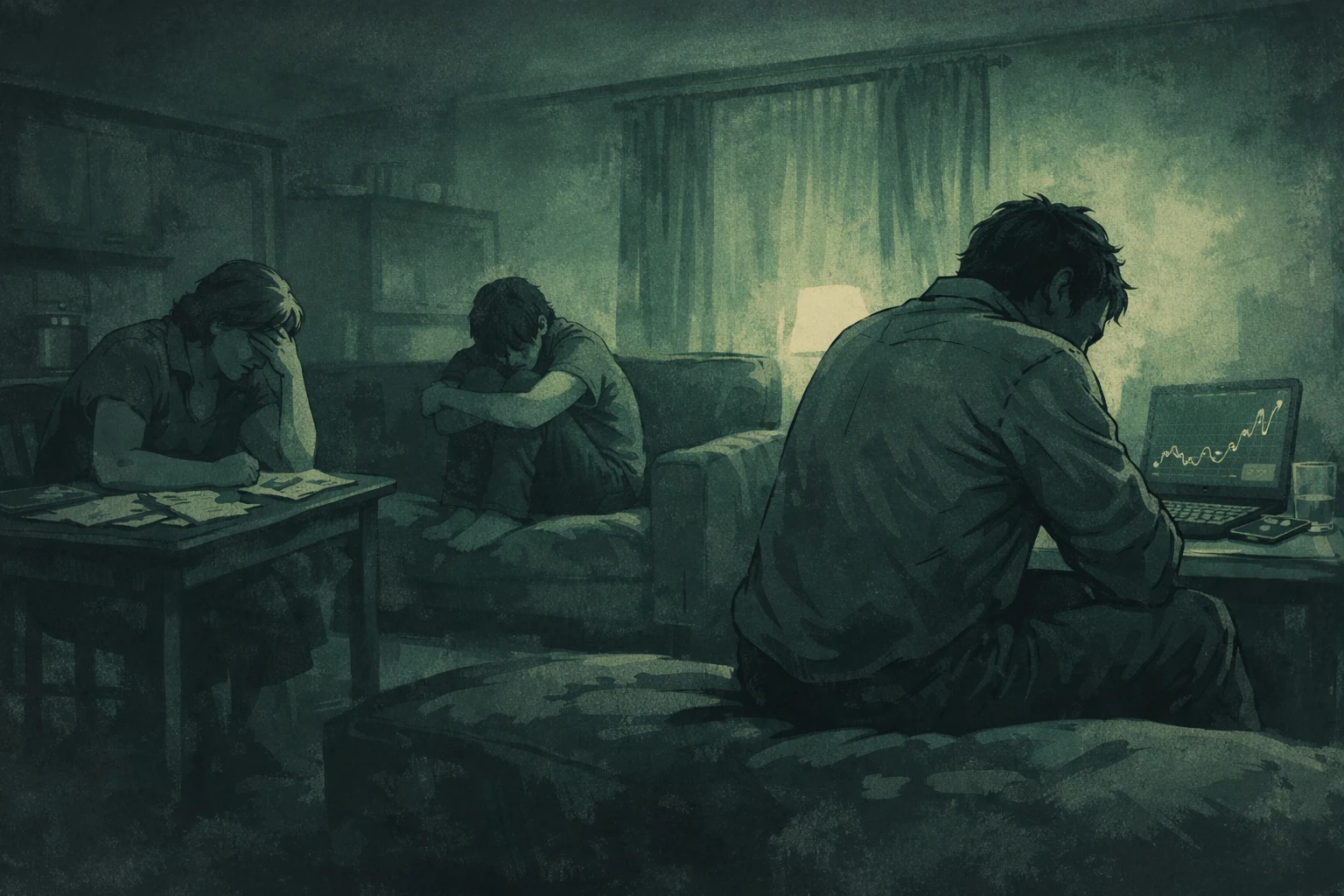
I think my father has been caught in a pig-butchering scam for almost two years now.
It has taken over his entire inner world. All he talks about anymore is crypto, “breaking out of the system,” and free-energy conspiracies. He wants to make a lot of money, but only if it comes through some hidden shortcut — some secret way to beat everyone else. Anything slow, boring, or legitimate doesn’t interest him. It has to feel like a loophole. It has to feel like he’s been chosen.
Over this time, he has given multiple hundreds of thousands of dollars — from family savings, personal accounts, and even short-term loans — to people who claim they are arranging a “special” credit card for him. According to them, it’s the kind of card only the ultra-wealthy can access. Once he has it, he’ll supposedly be able to spend the billions he has “made” through crypto trading on one of these fake arbitrage apps.
And of course, there is always another delay. Another verification step. Another fee. Another emergency payment he has to make before everything finally unlocks.
Meanwhile, we are now living paycheck to paycheck.
We sat down as a family and told him plainly that this isn’t real — that he has been scammed. At first it seemed like something got through to him. He went quiet. He listened. For a couple of weeks, there was hope. And then he went right back to it, like nothing had happened.
I don’t think he really hears us. We’re younger. My mom is a woman. I don’t think he respects our voices enough to let them challenge what he wants to believe.
Since being confronted about how much money is gone, he’s become a shell of who he used to be. He barely engages with us anymore. He speaks softly, like he’s shrinking inside himself. He seems distant, disconnected — like he’s halfway out of the world already.
And now I’m terrified that if we confront him again, if we tell him he’s being scammed again, it might push him into doing something irreversible.
I don’t know how to solve this.
My mom is exhausted. She is doing everything she can to keep us afloat, and she’s the only one working now. My dad doesn’t work anymore. It’s all on her. And she’s running out of strength.
It sounds like you’ve already tried the obvious things. You gathered evidence. You had serious conversations. You appealed to reason, to love, to common sense. You probably hoped there would be a moment where the facts finally broke through and everything snapped back into place.
The reason that moment hasn’t come is not because you failed. It’s because this isn’t primarily a logic problem. It’s a psychological one.
What your father is caught in isn’t just a bad investment or a misunderstanding — it’s an immersive belief system. These schemes don’t only promise money. They offer something deeper: purpose, identity, belonging, and a future that feels exciting and meaningful. They give someone a role to play and a narrative to live inside. Over time, that narrative becomes emotionally safer and more rewarding than reality.
Leaving it wouldn’t just mean admitting a mistake. It would mean grieving a dream, confronting shame, and losing a version of the future that has become central to how he understands himself. For many people, continuing feels emotionally easier than stopping — even as the real-world damage grows.
This is why repeated confrontations often backfire. When you attack the belief, you inadvertently threaten the emotional scaffolding holding him together. The more pressure he feels, the more tightly he clings to the story.
So the next phase is not about convincing. It’s about protecting and stabilizing.
Start shifting your energy toward boundaries rather than arguments.
If possible, separate shared finances from anything he can access. Involve outside professionals — a physician, financial counselor, elder-law attorney, or adult protective services — not to punish him, but to put guardrails around the damage. Look for a trusted third party who might have more influence than you do, and let them help carry the emotional weight of the conversation.
And most importantly: take care of yourselves.
You are not obligated to let this consume your family’s future. Protecting your mother’s stability, your household’s finances, and your own mental health is not abandonment — it is necessary.
There may not be a moment where he suddenly wakes up. That’s a hard truth. But you can still make choices that prevent one person’s private collapse from becoming everyone else’s.
Sometimes the most loving thing left isn’t persuasion.
It’s containment.
Leave a Reply