
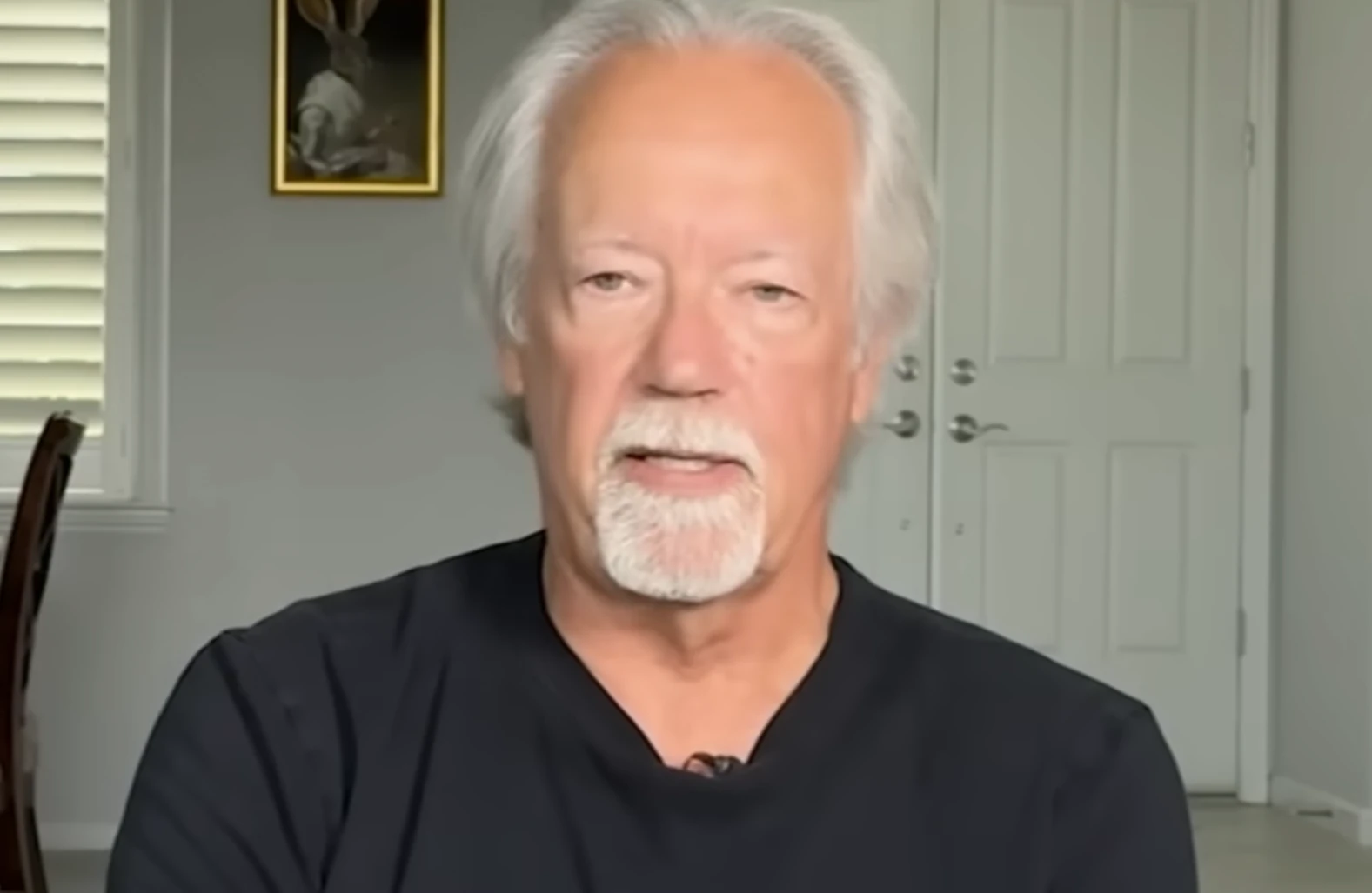
Larry Sorenson thought he’d found something close to happiness again.
After losing his wife of 35 years to cancer, he spent his days in a quiet Brentwood neighborhood, surrounded by reminders of the life they built together — the tile they chose, the pool they designed, the garden they imagined. He still talks about her in the present tense. “It was real love,” he says softly. “And I lost that.”
Then, one day in July, his phone buzzed. A text from an unfamiliar number lit up the screen.
“Hi Caitlin, I’m back from my trip to Napa Valley. Can you drop off my dog tomorrow?”
Sorenson wrote back: wrong number. The stranger apologized, then asked a question that would change his life: Are you also a dog lover?
The conversation continued — polite at first, then warm, then daily. Her name was Tina, she said. She was 45, lived in Los Angeles, ran a small energy company, and invested in real estate and crypto. She claimed to have a glamorous, lonely life. He told her he was a retired roofing contractor. They traded photos. She called him kind. He started looking forward to her messages.

Soon, they switched to WhatsApp — “because it’s encrypted,” she said — and the messages grew more intimate. Good morning, sweetheart. Hope the sun shines on you today. Every night ended with a digital goodnight.
He hadn’t felt that kind of connection since his wife’s death. He began exercising again, lost 30 pounds, bought a new suit for when they would finally meet. For the first time in months, he felt alive.
A Relationship That Never Existed
The relationship was a fiction. The woman calling herself Tina didn’t exist. Behind the photos and affectionate texts was a coordinated fraud operation — a network of scammers running what’s known as a pig-butchering scheme.
These scams combine romance fraud with investment cons. They begin with emotional grooming: sustained, personal conversations designed to build trust and affection. Once the victim is “fat enough,” the scammers introduce the hook — a supposedly lucrative crypto investment, complete with convincing screenshots, fake trading platforms, and even fabricated customer-service chats.
Tina claimed to have an aunt at Morgan Stanley feeding her insider tips. She showed him fake trading dashboards, promising enormous returns. “She showed me where she had traded three million and got a million,” Sorenson said. “It happens in five minutes.”

Within weeks, she had convinced him to move his savings from his IRA into a crypto account. First $500,000, then another $500,000. On the fake dashboard, his million appeared to grow to $2.4 million. He was thrilled. Tina encouraged him to invest more — to borrow from family, refinance his house.
When he tried to withdraw funds, the account froze. The balance vanished.
It was all gone — the million dollars, his retirement, the future he’d planned.
The Hidden Cost of Connection
There’s something uniquely cruel about this kind of crime. It doesn’t just drain savings; it drains trust.
The scammers exploit the loneliness that sits quietly in the background of modern life — the late-night texts, the algorithmic nudges, the need to feel seen by someone who seems to understand. Sorenson wasn’t reckless. He was grieving, isolated, and human. The same technology that connected him to the world after his wife’s death became the channel that ruined him.
According to the FBI, “pig-butchering” scams are now among the costliest types of cybercrime in the United States. Losses have grown into the billions, much of it extracted from retirees and widows — people who, like Sorenson, are in a fragile emotional state and looking for companionship.
The language of the con — encryption, blockchain, insider trading — adds a veneer of sophistication. But the psychology is ancient. Build trust. Create intimacy. Promise abundance. Then take everything.
How to Protect Yourself — and the People You Love
These scams thrive in the cracks between technology and emotion. The good news is that awareness still works. Here’s how to keep yourself and your loved ones safer:
1. Be skeptical of “wrong-number” texts.
A growing number of scams begin exactly this way — a casual “Oops, wrong number!” message that turns into small talk. If a stranger keeps chatting after a misdirected text, block and delete.
2. Be wary when someone insists on moving to WhatsApp or Telegram.
Scammers use encrypted apps because they’re harder to trace. If a new online acquaintance wants to switch platforms quickly, that’s a warning sign.
3. Remember this rule: if someone you met online asks you to invest in anything, it’s probably a scam.
It doesn’t matter how kind they seem, how real their profile looks, or how convincing their screenshots are. Real investment opportunities never start with a romantic conversation. The moment an online relationship turns financial, it stops being a relationship — it becomes a transaction, and you’re the target.
A Fragile Kind of Hope
When asked what he misses most, Sorenson doesn’t mention the money. He talks about the messages — the morning greetings, the sense that someone cared enough to ask how he was doing.
That’s what makes these scams so devastating. They don’t just target the wallet. They target the very human desire for connection.
Technology can give us extraordinary new ways to meet people, share stories, and build community. But it can also give predators direct access to our most private emotions.
Sorenson’s story is not an isolated tragedy — it’s a warning about what happens when loneliness meets the efficiency of modern fraud. In an era when connection is a tap away, trust has never been more expensive.
Leave a Reply