
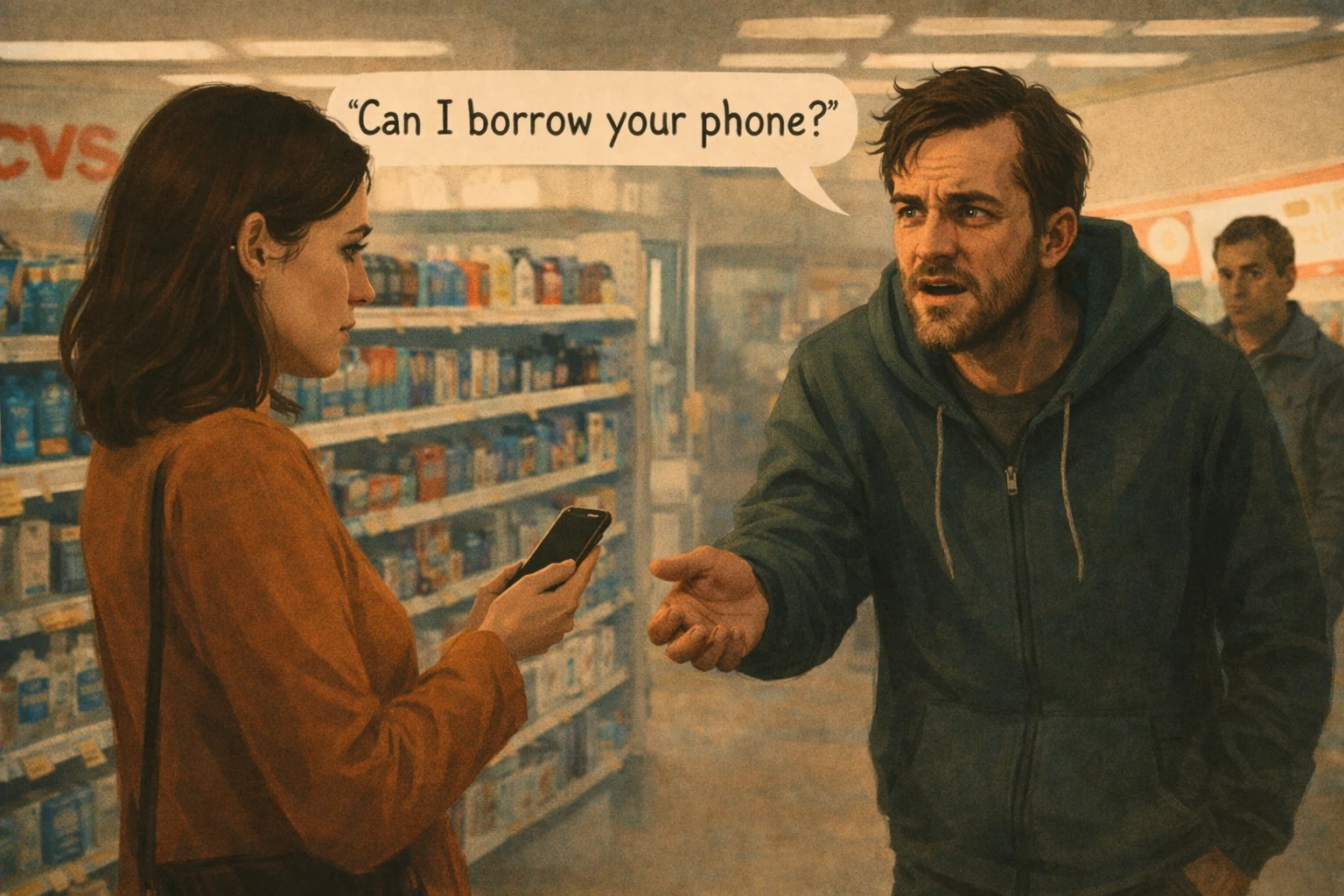
I was at CVS last night and a man came up to me and asked for help. I asked him what kind of help, and he said someone stole his phone outside, and could I use my phone to look up his phone number in the “find my phone” app so he could track it down quickly. I said no, sorry, I’m not comfortable with that and turned around and walked away. He called me a “dumb bitch” as I did so.
I’m sure his intentions were to scam me in some way, but I can’t figure it out. Is this a known scam? Someone else in line told me to ignore the man after they saw me talking to him. Apparently he’s a big problem in that area of town. Wondering if I should report this as a scam or if he’s just a crazy dude.
You didn’t just avoid a scam; you avoided a digital catastrophe. And you did it by conquering one of the most dangerous instincts we have: the urge to be “nice.”
Let’s play out the alternate reality where you said “yes.” Here is exactly how this scam likely would have unfolded had you handed over your device:
The Mechanics of the Trap
The moment you unlock your phone and hand it to a stranger, you are handing them the keys to your entire life.
- The Snatch-and-Run: The most obvious outcome is that he simply runs. Because the phone is already unlocked, he can wipe it and resell it before you even finish shouting for help.
- The Financial Drain: This is the sneakier, modern version. A skilled scammer doesn’t need ten minutes; they need thirty seconds. While pretending to type in his Apple ID, he could have swiftly toggled over to Venmo, Cash App, or your banking app. If you don’t have secondary FaceID locks on those specific apps, he could have transferred thousands of dollars to a burner account, handed the phone back, and walked away before you ever got a notification.
- The Hostage Situation: In some cases, scammers use the “Find My” app to lock your phone or mess with your iCloud settings, essentially holding your digital identity hostage.
Overcoming the “Politeness” Trap
Now, let’s talk about why you felt guilty.
We are conditioned from childhood—especially women—to be helpful, accommodating, and polite. We are taught that saying “no” is aggressive and that ignoring someone in distress is cold.
Predators and scammers count on this training. They weaponize your empathy. They know that if they create a situation of urgency (e.g., “I was just robbed!”), your brain will prioritize helping over evaluating. They are betting that you would rather risk losing your phone than risk looking like a jerk.
You have to give yourself permission to break that social contract. Here is the new rule: Your safety does not care about your manners.
- “No” is a Complete Sentence: You do not owe a stranger an explanation. You don’t need to say, “Sorry, my battery is low” or “I’m in a rush.” A simple, firm “No, I can’t help you” is all that is required.
- Be Willing to Be “Rude”: If protecting your bank account and your physical safety means a stranger at CVS thinks you’re “mean,” let them think it. Be weird, be rude, stay safe.
You passed the test. You kept your phone, and more importantly, you listened to your intuition. Don’t second-guess it now.
Leave a Reply